What “Mirage: The Reconstructed Space”
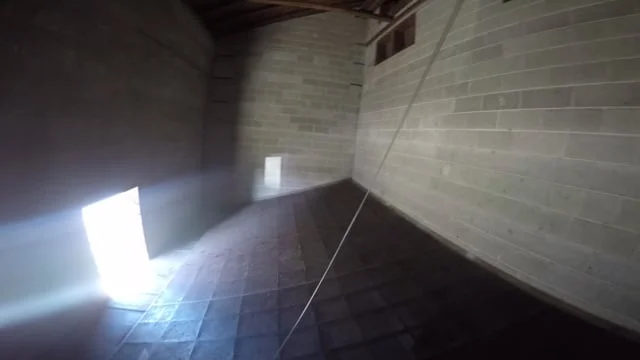
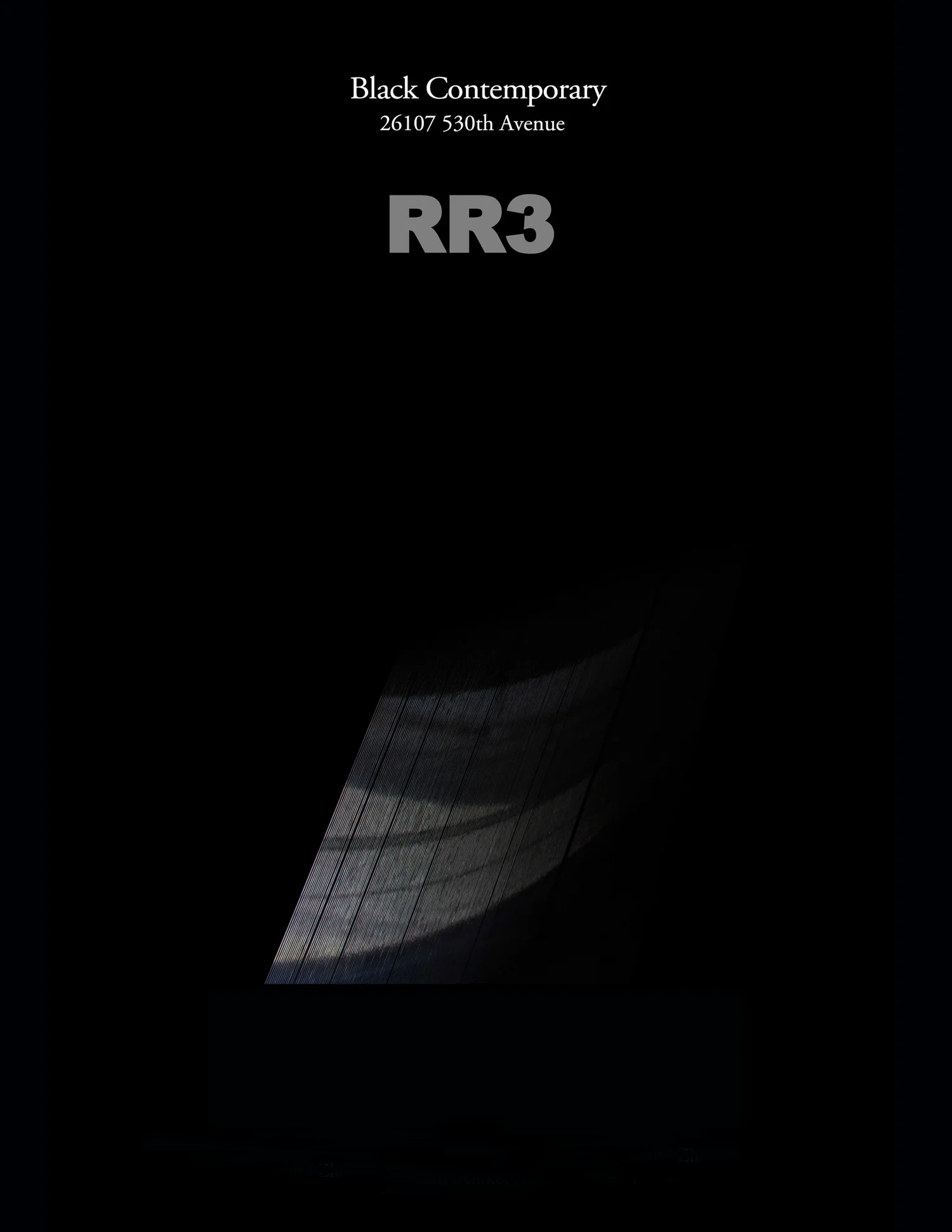
Aniket Nagdive’s Mirage: The Reconstructed Space is a site-specific, full-scale spatial installation staged inside a dormant seed-drying facility at the Black Contemporary field station near Ames, Iowa. The work is conceived as a “research assembly” that uses experiential perception as the primary design instrument, meaning the project is not just represented as drawings or images but is constructed at inhabitable scale so that perception, movement, and bodily proximity become the medium through which “space” is produced and understood. Within that repurposed agricultural container, Mirage is designed to be initially difficult to perceive, then to “appear” as the visitor crosses the threshold into the bin. The primary formal device is a calibrated field of line work (wires) whose muted visual weight and subtle reflectivity allow it to hover between visible and invisible depending on where the body stands and how light grazes the surface. This makes the installation operate like its namesake, a mirage, where perception is produced by atmospheric and optical conditions rather than by an obvious object on display.
What “Mirage: The Reconstructed Space” expresses
1) It advances architecture’s core subject, how humans perceive and construct “space,” not just form
Architecture is not only the shaping of material, it is the shaping of experience. Mirage makes that claim testable. Instead of treating atmosphere as a background condition, the project uses ambience, darkness, glare, and reflectivity as active design variables that control what a visitor can and cannot see, and when. This is a rigorous architectural move because it frames space as something that emerges through embodied interaction (movement, threshold crossing, changing angles of view), not merely as geometry in plan and section. This aligns with established architectural discourse that treats atmosphere and felt space as central to architectural effect, and it does so through built evidence rather than rhetoric. In practical terms, Mirage is an architectural prototype that demonstrates how perceptual “invariants” and occlusions can be produced through minimal means, creating a spatial event that unfolds over time.
2) It converts rural agricultural infrastructure into a contemporary architectural laboratory
A major contribution of the project is its reuse strategy, not as renovation for program, but as reuse for research. The seed-drying facility and bin are not neutral containers. They are part of a working agricultural landscape whose technologies manage air, moisture, heat, and time. Mirage reframes that industrial rural artifact as an instrument for architectural inquiry, where the building’s existing darkness, curvature, enclosure, and latent mechanical logic become design partners. This matters in the architectural field because adaptive reuse is often evaluated by new program, new facade, or carbon savings alone. Mirage argues for another form of reuse value, intellectual value, where underutilized or “quiescent” rural sites can host experimental spatial practice and public cultural engagement. That expands the discipline’s territory beyond the city and beyond the museum, into landscapes where architecture is intertwined with land use, labor, and ecological cycles.
3) It makes “invisible systems” legible, energy flows, processes, and atmospheric work
Mirage explicitly positions itself as an expression of Iowa’s agricultural landscape that “delineates the seen and unseen energy flow” of the harvest field. Architecturally, this is significant because it reframes building performance and infrastructural process as experiential content. Instead of explaining the bin’s purpose with diagrams, the installation uses line work and reflectivity to evoke the “cloaked flows of energy and processes” central to corn drying bins.
That approach is not metaphor-only. Grain drying and storage are literally energy-and-air systems, involving airflow management, fans, and the movement of drying or cooling fronts through stored grain. By turning the bin into an optical and spatial instrument, Mirage translates this otherwise hidden operational reality into a perceptible architectural encounter.
4) It contributes an original spatial technique, the “threshold reveal” as a designed event
One of the most architecturally precise aspects of Mirage is its choreography of appearance. The plane of wires is “concealed upon the introductory approach” and then introduces itself as the visitor crosses into the interior. This is not accidental, it is a deliberate sequencing of perception, where threshold is treated as a switch that changes the visual field and converts ambiguity into recognition. This technique matters because it offers a transferable method for architects working with minimal means. The project demonstrates how calibrated micro-decisions (wire spacing, connection points, alignment to light entry, relation to curvature) can generate macro-level spatial effect, an “aura of simplicity” that is actually the result of high control.
5) It engages a pressing architectural topic, rural spatial instability and land-use futures
Mirage’s written framing ties the installation to the social and spatial consequences of agricultural modernization: mechanization, consolidation, dependence on market forces and policy, and the resulting pattern of vacant or restructured farm sites. Importantly, this is not presented as abstract commentary, it is tied to the specific Iowa grid landscape and to the lived condition of rural communities.
Architecturally, this is a major significant claim because it positions design practice as a tool for re-occupying and reinterpreting landscapes under transformation, creating a platform where architecture can participate in land-use discourse through cultural production, not only through planning policy or real estate development.
6) It operates inside a curated research platform with public-facing discourse
Mirage is not a one-off object placed in a gallery. It is situated within Black Contemporary’s broader mission as an “experiential laboratory” investigating atmospheric logics, perception, and spatial phenomena through exhibitions, dialogues, and interdisciplinary participation. Rural Route 3 (RR3) is described as an annual spring exhibition transforming the field station into a public art site, intentionally staged as an evolving environment “between design process and fabrication” and “between sensorial gauges and installation.”